Honeyworker: A Sweet Script Font
One crisp morning, I was working on a set of candle labels for my small handmade shop. The candles were scented with lavender and vanilla, and I wanted the labels to reflect that gentle, calming vibe. I opened my design software and scrolled through my font collection, searching for something that felt warm and inviting. That’s when I found Honeyworker.
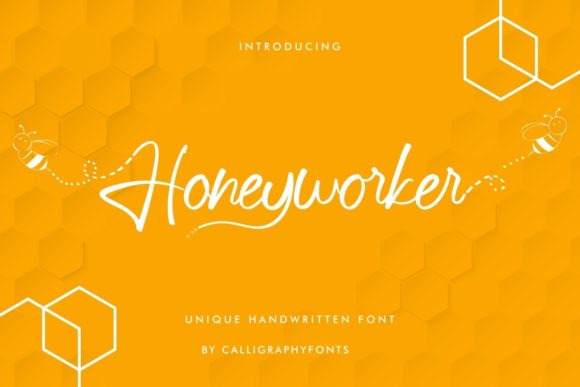
Honeyworker is a cursive, handwritten font with a soft, flowing style that feels like it was written with a pen and ink. Its swashes and ligatures give it an elegant, personal touch, making it perfect for anything that needs a little extra charm. I’ve used it on everything from greeting cards to packaging, and it always adds that special something that makes a product feel handcrafted and thoughtful.
As a maker, I know how important it is for a font to look good in different sizes and formats. Honeyworker works well for short phrases, names, and titles, but I’ve also found it can be used creatively in longer text when designed carefully. It’s great for decorative wording, display use, and even product labels where a personal touch matters.
Using Honeyworker in Handmade Projects
For my candle labels, I paired Honeyworker with a clean sans serif font to balance the script’s delicacy. The result was a label that felt both professional and personal—perfect for a small business looking to stand out. I also used it on a set of printable wall art for a client who wanted a farmhouse-style design. The font added a nostalgic, handcrafted feel that matched the overall aesthetic perfectly.
I’ve tested Honeyworker on stickers, too. When I created a sticker sheet for a seasonal project, I made sure to adjust the spacing and size so it would cut cleanly on a Cricut machine. It worked beautifully, and the final product had a soft, artistic look that customers loved.
Another project I worked on was a set of wedding invitations. Using Honeyworker for the couple’s names and the event details gave the invitations a romantic, personalized touch. It wasn’t too flashy, but it still felt special enough for a wedding. I paired it with a simple serif font for the body text, which helped keep the design readable while maintaining the elegance of the script.
Designing for Different Mediums
Whether I’m designing for print or digital, Honeyworker has proven to be versatile. On a tote bag, it looks great as a tagline or name. On a mug, it adds a nice touch without overwhelming the design. For digital downloads, I’ve used it in printable planner pages and seasonal templates, where its natural flow gives each page a unique, handcrafted feel.
When I create packaging for my products, I often use Honeyworker for the brand name or a tagline. It helps reinforce the identity of my shop and makes the packaging feel more cohesive. I also use it on boutique tags and signage, where a little personality goes a long way.
One thing I always check before using a font in a commercial project is the licensing. Honeyworker is PUA encoded, which means I can access all the glyphs and swash options without worrying about limited character sets. This is especially useful when creating multilingual designs or customizing text for different markets.
Pairing Honeyworker with Other Fonts
Font pairing is an important part of any design project, and Honeyworker pairs well with a variety of other fonts. For a modern look, I often pair it with a bold display font or a clean sans serif. For a more traditional feel, a simple serif font works nicely. If I’m going for a more casual or playful design, I might pair it with another handwritten or script font to add depth and interest.
When working on a digital printable, I make sure to test the font at different sizes and on different backgrounds. Sometimes, a font that looks great on a screen doesn’t translate well to print, so I always do a few test prints before finalizing a design. Honeyworker holds up well in both formats, which is a big plus for anyone selling printables or merchandise.
Another consideration is readability. While Honeyworker is beautiful, it’s not the best choice for long blocks of text. It works best for headlines, titles, and short phrases. I always keep this in mind when designing for product labels or small stickers, where clarity is key.
Final Thoughts on Honeyworker
As a maker, I’ve found Honeyworker to be a valuable addition to my design toolkit. Its soft, cursive style adds a touch of warmth and personality to any project, whether it’s a candle label, a greeting card, or a wedding invitation. It’s easy to use, versatile, and visually appealing, making it a great choice for anyone looking to elevate their handmade products or digital designs.
If you’re a crafter, stationery designer, or printable creator, I highly recommend giving Honeyworker a try. It’s a premium font that brings a sense of care and creativity to every project it’s used in.